
Introduction
In today’s fast-evolving world of industrial operations, drone inspection has emerged as a transformative solution. Whether for power transmission lines, substations, solar farms, or oil pipelines, drones provide safer, faster, and more cost-effective inspections.
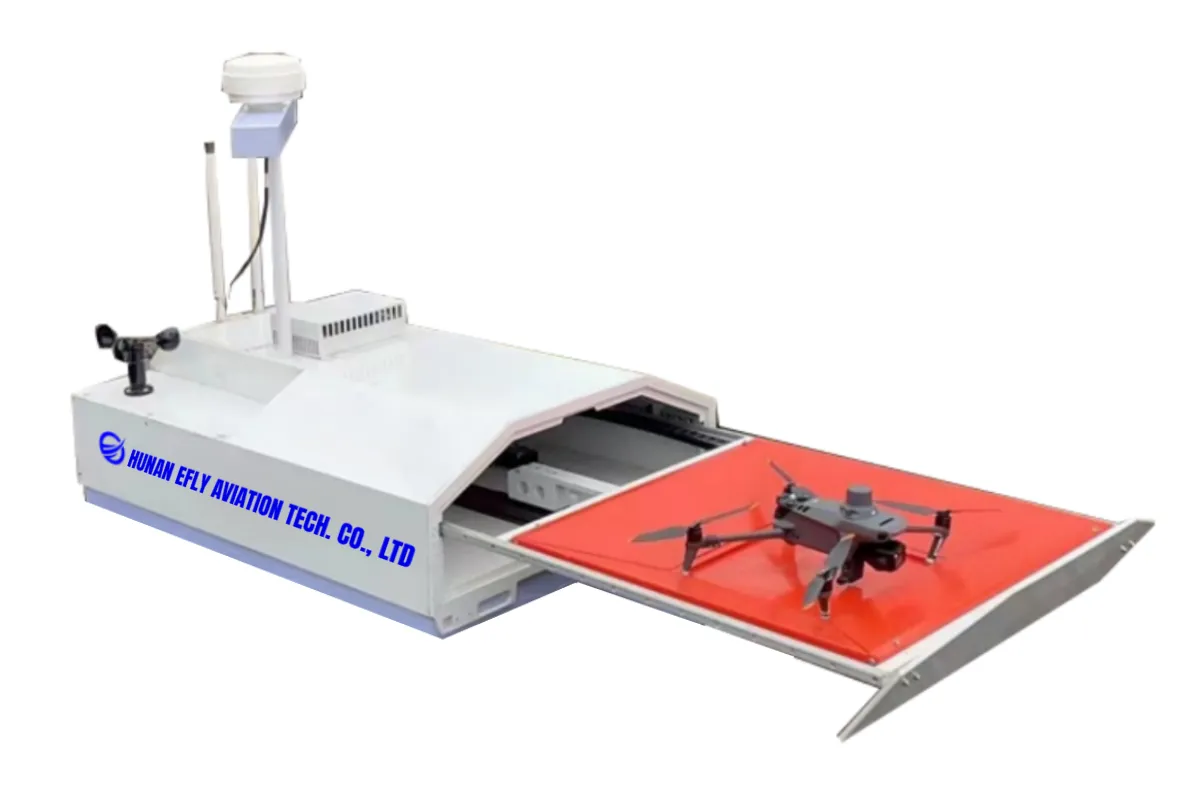
But drones cannot reach their full potential without a robust drone hub design. At EFLY Aviation, we specialize in creating industrial drone hubs, pairing them with powerful software to deliver autonomous inspection solutions. Our hubs include:
-
Mobile drone hubs for flexible field deployment.
-
Solar-powered hubs for sustainable 24/7 operations.
-
Ultra-high-voltage tower hubs built for demanding environments.
-
Lightweight hubs optimized for mobility and smaller-scale inspections.
In this article, we will explore the design principles behind reliable drone stations, showcase case studies from the power industry, and demonstrate how EFLY’s drone hub + software ecosystem is transforming industrial inspections.
The Importance of Drone Hub Design
A drone hub design is not just about charging batteries — it’s about creating a durable drone hub that enables drones to work autonomously across industrial environments.
Key functions include:
-
Automated charging or battery swapping.
-
Secure housing against weather and vandalism.
-
Data transfer via 4G/5G or satellite.
-
Remote monitoring for fleet control.
With these features, drones become autonomous inspection agents. For industries like power transmission, oil & gas, and infrastructure, this is game-changing.
👉 Discover our industrial drone hub solutions.
Case Study: Power Industry Inspections
Power inspections are one of the most demanding fields for drones. Assets include:
-
Transmission lines (spanning thousands of kilometers).
-
Substations (critical nodes requiring regular monitoring).
-
Ultra-high-voltage towers (difficult to access and dangerous for workers).
Traditional methods rely on ground crews or helicopters, which are costly, slow, and dangerous.
With EFLY’s reliable drone station solutions:
-
Drones can be deployed automatically from hubs installed near transmission corridors.
-
AI-driven analytics detect faults such as insulator cracks, vegetation encroachment, or overheating.
-
Reports are generated automatically for operators.
Benefits in Numbers
| Aspect | Traditional Inspection | Drone Hub-Enabled Inspection |
|---|---|---|
| Cost per km inspected | High (helicopters, trucks) | Low (autonomous drones) |
| Inspection Frequency | Monthly or seasonal | Daily or weekly |
| Safety | High-risk (heights, live wires) | Low-risk, remote operations |
| Data Accuracy | Moderate | High-resolution, AI-verified |
This illustrates why durable drone hubs are vital to scaling drone inspections.
Types of Drone Hubs by EFLY
1. Mobile Drone Hub
Designed for field teams who need flexibility:
-
Portable and quick to deploy.
-
Ideal for construction sites and temporary inspections.
-
Paired with inspection software for task scheduling.
👉 See our drone hub design optimized for mobility.
2. Solar-Powered Drone Hub
Sustainability meets automation:
-
Fully powered by solar panels.
-
Enables round-the-clock inspections in remote areas.
-
Perfect for solar farms, wind farms, and oil pipelines.
👉 Explore our solar-powered drone hub for renewable energy applications.
3. Ultra-High-Voltage Tower Hub
Built for extreme conditions:
-
Reinforced housing for harsh weather.
-
Precision landing systems for tower-mounted deployments.
-
Tailored for power transmission corridors.
4. Lightweight Drone Hub
Compact, efficient, and scalable:
-
Suited for agriculture and infrastructure inspections.
-
Easily transportable for smaller projects.
-
Cost-effective without sacrificing durability.
Integration with Software
EFLY’s strength is not only hardware. Each hub integrates seamlessly with our drone inspection software:
-
Mission planning for routine flights.
-
Live monitoring for remote teams.
-
Data visualization through 3D models and thermal maps.
-
Automated reporting with AI-powered defect detection.
This integration transforms a hub from a charging station into an intelligent drone inspection platform.
Extended Use Cases
Beyond power inspections, our drone hub design supports multiple industries:
Oil & Gas
-
Pipeline surveillance with solar-powered hubs.
-
Refinery safety checks with lightweight hubs.
Construction
-
Progress monitoring with mobile hubs.
-
Bridge inspections with reliable drone stations.
Agriculture
-
Crop health monitoring with AI-enabled analysis.
-
Irrigation system inspections with durable hubs.
ROI of Deploying Drone Hubs
| Metric | Without Drone Hub | With EFLY Drone Hub |
|---|---|---|
| Inspection Cost | High (labor + travel) | Reduced by 50–70% |
| Inspection Frequency | Limited | On-demand or scheduled |
| Human Risk | Significant | Minimal |
| Data Delivery | Delayed | Instant, cloud-based |
| Asset Lifespan | Shorter (late fault detection) | Extended (predictive maintenance) |
Clearly, adopting drone hub design is not just a technological upgrade but a financial advantage.
Why Choose EFLY Aviation?
-
Manufacturing Expertise: We design and build hubs tailored for industrial use.
-
Integrated Software: End-to-end inspection platforms.
-
Procurement Services: We provide drone acquisition (代购) support for enterprises.
-
Customization: Hubs designed for specific industries and environmental conditions.
At EFLY, our mission is to deliver not just drone hub design, but a complete ecosystem for autonomous inspections.
Conclusion
Drone hub design is the foundation for reliable, scalable, and autonomous industrial inspections. By combining mobile, solar-powered, ultra-high-voltage, and lightweight hubs with powerful software, EFLY Aviation enables industries to:
-
Reduce costs.
-
Improve safety.
-
Increase inspection frequency and accuracy.
From power transmission corridors to agricultural fields, our industrial drone hubs and solar-powered drone hubs represent the future of unmanned inspections.
👉 Learn how our durable drone hub solutions can transform your inspection strategy today.