
Introduction: Protecting Our Planet with Smarter Tools
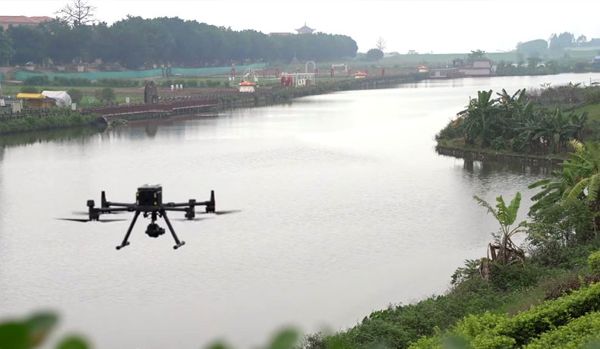
Environmental surveillance is no longer a luxury—it is a necessity. With climate change accelerating, deforestation continuing at alarming rates, and illegal activities threatening biodiversity, the need for efficient and eco-friendly monitoring systems has never been greater. Traditional patrol methods, often involving manual fieldwork, are expensive, time-consuming, and sometimes dangerous.
Enter the small mobile drone base from EFLY AVIATION. By enabling autonomous takeoff, landing, and data transmission, these compact stations provide a breakthrough in environmental surveillance. They reduce the human footprint in sensitive habitats while maximizing efficiency and reliability.
In this article, we will explore how EFLY’s technology empowers agencies, NGOs, and governments to strengthen wildlife patrols, protect ecosystems, and monitor environmental risks sustainably.
Why Traditional Environmental Patrols Fall Short
Conventional patrol systems rely heavily on manpower. Rangers or inspectors must physically enter forests, wetlands, or coastlines to gather data. This creates several challenges:
- High Costs: Continuous manual patrols require significant funding and personnel.
- Limited Reach: Remote areas are often inaccessible, leaving gaps in surveillance.
- Environmental Disruption: Human presence can disturb wildlife habitats.
- Delayed Data: By the time data is collected, analyzed, and reported, conditions may have already changed.
A mobile drone base solves these issues by allowing drones to operate independently, collect high-resolution data, and transmit it directly into advanced software analytics.
EFLY’s Small Mobile Drone Base: A Game Changer
EFLY AVIATION has engineered a lightweight large drone hub that combines mobility, compact design, and autonomy. Unlike traditional ground stations, the mobile drone base provides:
- Seamless Deployment – Its compact structure allows easy transport and installation in forests, coastal areas, or remote wetlands.
- Autonomous Recharging – Drones return to the hub automatically for battery swaps or charging, enabling 24/7 patrols.
- Smart Data Upload – Integrated connections send captured images and sensor data directly to EFLY’s software analytics platform.
- Eco-Friendly Operations – Designed to minimize noise and ecological disturbance during wildlife patrol missions.
For technical details on structure and weight optimization, visit EFLY’s lightweight large drone hub page.
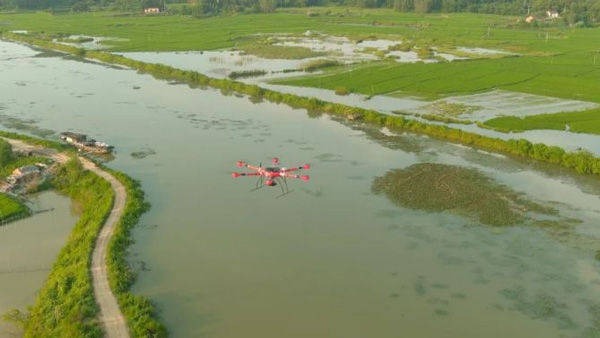
Environmental Applications of Small Drone Bases
1. Wildlife Protection and Anti-Poaching
Illegal poaching continues to devastate populations of elephants, rhinos, and endangered birds. Rangers equipped with mobile drone bases can:
- Detect intruders using thermal cameras.
- Conduct night-time patrols without risking human lives.
- Cover larger areas faster than ground teams.
According to the World Wildlife Fund, poaching is one of the leading threats to biodiversity, making autonomous wildlife patrol solutions critical.
2. Forest and Land Monitoring
Deforestation contributes to nearly 10% of global greenhouse gas emissions (UNEP Report). By deploying mobile hubs along vulnerable forest zones, drones can:
- Track illegal logging activities.
- Measure tree cover loss with real-time imaging.
- Support reforestation projects through aerial mapping.
Integrating solar-powered options, such as EFLY’s solar-powered drone hub, makes these patrols both sustainable and scalable.
3. Coastal and Marine Surveillance
Marine ecosystems are under constant pressure from illegal fishing and pollution. By placing mobile drone bases along coastlines:
- Authorities can detect unauthorized fishing vessels.
- Drones can monitor coral reef health and coastal erosion.
- Data can be fed directly into predictive models for climate impact.
NASA research (NASA Ocean Climate Studies) confirms the importance of real-time monitoring in protecting marine biodiversity.
4. Disaster Response and Environmental Risk Assessment
Environmental patrols are not limited to routine monitoring—they are critical during emergencies. In the aftermath of floods, wildfires, or hurricanes, EFLY’s mobile drone bases help:
- Assess damage remotely.
- Identify areas in need of urgent aid.
- Prevent secondary disasters by analyzing structural risks.
The Role of Software Analytics in Environmental Surveillance
The success of environmental patrols depends not only on drone hardware but also on data intelligence. EFLY’s software analytics platform supports:
- AI-powered detection of illegal activities.
- Automatic generation of patrol reports.
- Predictive modeling of environmental risks.
- Cloud-based collaboration between environmental agencies.
This seamless integration reduces reporting delays and ensures decision-makers act on real-time insights.
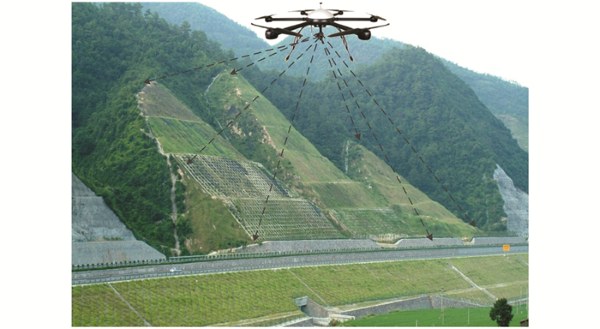
Case Study: Protecting Wetlands with EFLY’s Drone Base
In Southeast Asia, a conservation project deployed EFLY’s small drone bases to monitor sensitive wetlands. Traditionally, rangers had to wade through waterlogged areas, risking both safety and damage to the ecosystem. With the mobile hub:
- Drones conducted autonomous environmental surveillance twice daily.
- Data was analyzed via the software analytics platform.
- Illegal dumping sites were identified 60% faster.
- Wildlife disturbances were minimized, supporting habitat stability.
This case highlights the hub’s role in creating a minimal footprint yet maximum impact approach.
Comparing Small vs. Solar Drone Bases
While the small drone base is built for mobility, the solar-powered drone hub offers off-grid sustainability. In environmental patrols, agencies often combine both systems:
- Small hubs for dynamic, on-the-go missions.
- Solar hubs for permanent monitoring in remote ecosystems.
Together, they form a holistic solution for eco-friendly monitoring.
Why Partner with EFLY AVIATION?
EFLY AVIATION stands out for:
- Decades of Innovation – Leading expertise in drone inspection and environmental technology.
- Flexible Deployment Models – From lightweight drone hubs to large-scale solutions.
- End-to-End Ecosystem – Hardware combined with analytics software.
- Global Reach – Trusted by energy, mining, and environmental organizations worldwide.
For tailored solutions, visit the contact page to connect with our experts.
Conclusion: The Future of Eco-Friendly Monitoring
The challenges facing global ecosystems are immense, but with innovation comes hope. EFLY’s small mobile drone base empowers environmental agencies to monitor, protect, and restore nature more effectively. By combining mobility with AI-driven analytics, it ensures eco-friendly monitoring that aligns with sustainable development goals.
To learn more, explore EFLY AVIATION’s homepage and discover how small drone bases are reshaping the future of environmental surveillance.